
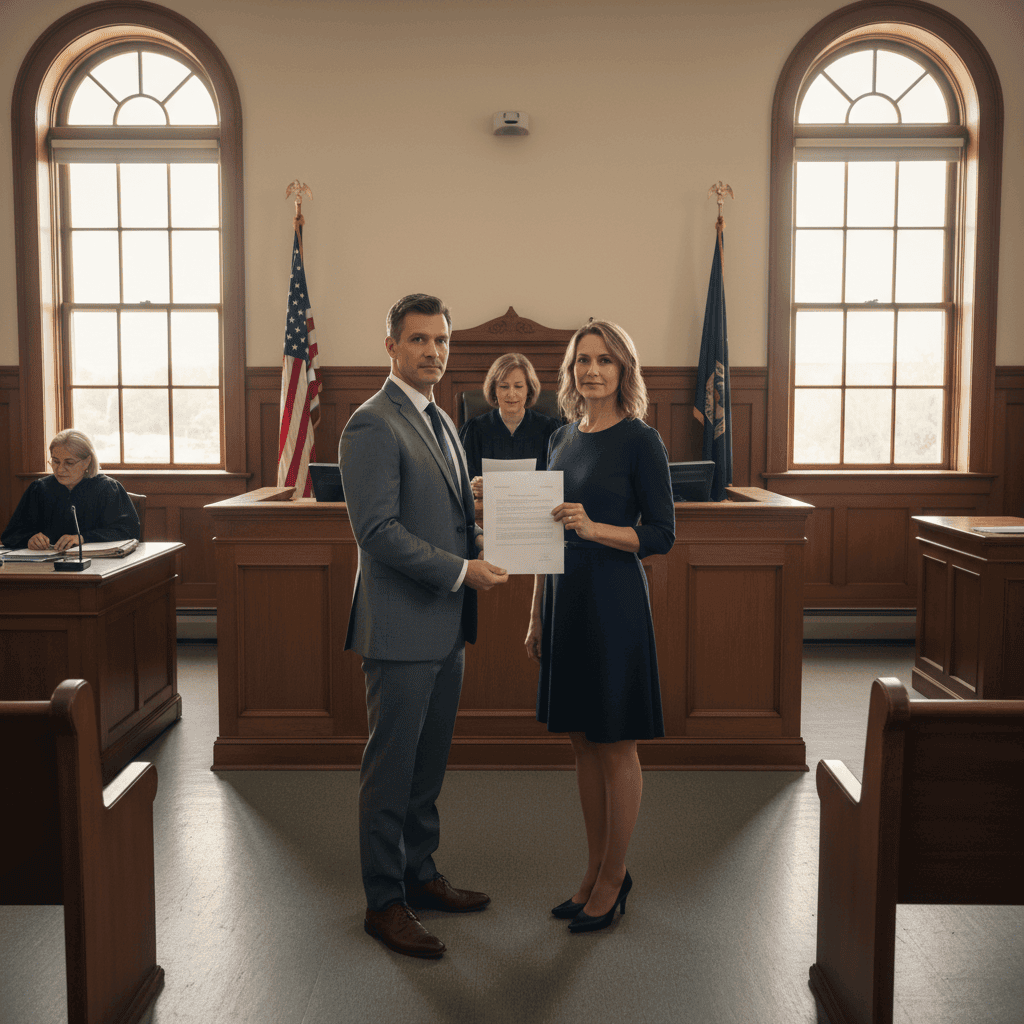
Court Appearance In Uncontested Divorce
Facing a divorce often brings questions about whether you will need to step into a courtroom or if the matter can be finalized without a hearing. For many couples who choose an uncontested divorce the process can be faster and less stressful. Still some steps are required and a clear picture of court appearance rules helps you plan and avoid surprises.
This article explains practical realities around Court Appearance In Uncontested Divorce. You will find examples drawn from common scenarios, tips for reducing your time at court, and a plain explanation of when a judge will expect both parties in the same room. If you live in Kissimmee or nearby areas local practice can affect whether a hearing is set and how it proceeds.
What an uncontested divorce means for a court appearance
An uncontested divorce usually means both spouses agree on the major items that courts handle. Those items include division of property, responsibility for debts, child custody and visitation, and child support. Agreement reduces the need for contested hearings where each side argues their position.
Even when there is agreement the court still reviews paperwork for legal sufficiency. The judge checks that the documents comply with state law and that there is no coercion. Where all required forms are complete and signed, many judges will sign the final judgment without a personal hearing. In other situations a short hearing may be necessary to confirm identities and signatures or to address procedural requirements.
How rules about Court Appearance In Uncontested Divorce vary by county
Local practice matters. Some counties operate a routine final hearing even for uncontested files. Other counties accept submitted documents and issue an order without scheduling a hearing. The difference usually depends on courtroom schedules and the judge assigned to family court on a given day.
If you live near Kissimmee you can find county rules or speak with an attorney who practices locally. A local lawyer can highlight common clerk procedures and whether personal attendance is typical for finalizing an uncontested case. For one source of local guidance visit Hungate Law to view practice notes and next steps for cases filed in that area.
Common reasons a court hearing may still be required
Agreement does not always mean absence from court. Judges sometimes require an appearance for one of these reasons
- There are minor children and the court wants to verify parenting arrangements and parental understanding of obligations
- One or both parties signed documents under questionable circumstances and the judge wants to confirm voluntariness
- Financial disclosures are incomplete or conflicting and the court needs clarification
- Court policy in that jurisdiction calls for a short final hearing even when the case is uncontested
How to avoid appearing in court for an uncontested divorce
When both sides want to limit or avoid a courtroom appearance there are practical steps to reduce the likelihood of being called in person. These steps also speed up the timeline and reduce overall expenses.
Prepare and file complete paperwork
Missing forms are the most common reason judges ask for a hearing. Provide signed financial affidavits, a final judgment form that meets local requirements, and any parenting plans if children are involved. If property or debts are listed include schedules that match tax returns and account statements when required.
Use notarized statements and agreed orders
Where allowed a notarized affidavit from both parties can replace live testimony. An agreed final judgment that contains clear signatures and notarization is easier to accept without an appearance. If a judge still requests a hearing a notarized statement can shorten the session to a few minutes.
What to expect if a court appearance is required
If you must appear the experience is often brief in uncontested matters. Most judges conduct a short hearing to confirm identities and ask a few standard questions to verify the agreement is voluntary and lawful. Knowing the typical flow helps reduce anxiety.
Typical courtroom procedure for uncontested cases
- Arrive early and check in with the clerk
- Wait in a designated family court area until your case is called
- When called approach the bench and stand or sit where directed
- The judge will ask simple questions about your agreement and whether you entered it freely
- If all is in order the judge signs the final judgment and the clerk files it
Example of judge questions you may hear
Examples include a short confirmation of your name and address and a question asking if you are signing the agreement freely. If children are involved the judge may ask whether you understand the parenting time schedule and child support amount. These questions are not adversarial. The aim is to confirm the record is accurate.
Practical tips for a smooth court appearance or waiver
Small steps make a big difference. Consider these practical moves
- Check the clerk website for a hearing checklist and required forms
- Bring original identification and copies of signed agreements for the judge and clerk
- Dress neatly and arrive thirty to sixty minutes early to handle security and filing tasks
- If you prefer not to speak ask if a written statement can be accepted by the court
- Ask the clerk if the judge will accept emailed or mailed notarized documents in lieu of a hearing
These measures can turn a potential multi hour trip into a quick visit or eliminate the need for a trip entirely. Filing correctly the first time is the best way to reduce interruption to your schedule.
Common questions about Court Appearance In Uncontested Divorce
People ask similar questions when planning an uncontested divorce. Here are clear answers and brief examples.
- Can one spouse sign papers and the other not attend
Yes when the court accepts agreed documents and a notarized signature. If a hearing is scheduled the absent spouse may be asked to submit a sworn statement or waiver explaining the absence. - What happens if the judge wants more information
The judge may schedule a short hearing or request supplemental documents. This is common when financial disclosure is incomplete. Preparing detailed schedules in advance reduces the chance of follow up. - Are there extra fees for a canceled hearing
Clerks sometimes charge filing or re scheduling fees. Check local rules and calendar availability to avoid extra court costs.
After the final judgment what comes next
Once the judge signs the final judgment the court will file and enter the order. That step makes the divorce effective according to state law. Keep certified copies for bank and title changes and for modifying beneficiary or insurance information if needed.
If child support or parental responsibility is part of the judgment register the order with the appropriate child support enforcement agency when required. For property transfers record deeds or vehicle titles with the county recorded documents office. Acting promptly prevents confusion over ownership and debt responsibility.
When it makes sense to consult a local family lawyer
Uncontested does not mean simple in every case. If property values are high, if retirement accounts need complex division, or if the parenting schedule involves travel or schooling issues a lawyer can help finalize language that prevents later disputes. Legal counsel can also check that forms meet court requirements so you avoid a hearing that would otherwise be unnecessary.
Finding someone familiar with local practice can reduce unexpected court appearances and keep the process moving. A short consultation can clarify whether the case can be finalized on the papers or whether a brief court visit is likely.
Whether you hope to avoid a hearing or must prepare for one good preparation makes the difference. Collect complete records, use clear written agreements, and confirm local clerk practice. When in doubt seek local guidance to minimize procedural delays and to protect your long term interests.
If you are ready to take the next step start by reviewing the clerk checklist for your county and assembling financial disclosures. A concise review with local counsel can clarify whether you will need to appear in court and help you file paperwork in a way that reduces footwork and stress. Taking these steps will save time and keep the process moving toward closure.